Thursday, 21 August 2025

Flower’s Final Night (short story)


Flower’s Final Night

(Random 2-word prompt- free, cellar)


                Flower scraped his spoon against the grouting between the damp stones, an attempt to wear down the cement and loosen an exit.  Grinding and grating echoed in the cell, metal against grit, and his effort sung an accompaniment to his wheezing breaths.  Rust and dust on his lungs, he coughed, then continued with his never-ending task.

                “It won’t work, you know,” muttered the old man who was chained to the opposite wall.  “Plenty have tried, none have succeeded.”  He smacked his dry lips together.  “Seen ‘em all come and go.”

                Flower ignored him.  The digging was the only thing keeping him warm in this cold dungeon.  And sane.  He needed hope.  He was going to be beheaded tomorrow.

                “You just gotta accept your fate,” continued the man.  His emaciated grimy body had its dignity concealed only by a scraggly grey beard that stretched from his chin to his knees.  Moonlight, from the grate on the ceiling, cast shadowy lines on his already lined and aged face.  “Pray to whatever gods you believe in while you can.”

                Flower paused.  “What if I don’t believe in any?”

                “Well, you’re fucked then, ain’t cha?”

                Flower rolled his eyes, then returned to his task.  He traced a line with the tip of the spoon along the underside of the stone he’d been working on.  He’d barely got anywhere since he’d started several hours ago, and the scraping and scratching was becoming irritating.  He knew he was annoying his cellmate; he was annoying himself.  He had blisters forming on his fingers.  His knuckles were chapped and cracked.  Bleeding.  So were his lips.  The constant dust dried the air, sucked the moisture from his skin despite the dampness in the cell, and it hurt.  But he carried on.

                “Please stop.”  The old prisoner groaned.  “You’re giving me a headache.”

                “I can’t,” said Flower.  “Felix needs me.”

                “Felix?  Felix?!  Is that your lover?”

                “No.”  Flower sighed.  “He’s my cat.”

                The old man cackled; it was loud and witchy, gurgly and high pitched.  It echoed against the walls of the small chamber, bounced from stone to stone.  It vibrated in Flower’s ears.  And when the discordance died down, he was disappointed to discover that it hadn’t shaken any of the stones loose and freed them both.  Or even just him.

                “He’s only a kitten,” said Flower, still scraping away at the wall.  “I’ve got a life to go back to.  It’s messy, but it’s mine.”  He stopped and turned around.  The old prisoner was staring at him, wide-eyed and incredulous, wrinkles furrowed in deep trenches on his forehead and rippling along his bald dome.  “Why are you here?  What did you do?”

                “What did you do?”

                “Murdered the King apparently.”  Flower shrugged.  “I didn’t, but the Queen...”

                “Bah, who cares about that rancid old cow!”  The old man cackled his disturbing cackle once more.  “She stole that throne!”  His voice dropped to a whisper.  “There was a good King in charge about fifty years ago, a patient and just King.  And not that dead one you killed; a living King who looked after everyone and put the country first.  But she… she!  She!!  She usurped the throne from him.”

                “Her brother?  He was King first, right?”

                The shackled prisoner shrugged.  As much as it was possible to shrug with his arms chained up.

                Flower studied the man’s features; there was something familiar about his face.  “I heard he was just as bad as her,” he said, keeping his eyes on the man.  “Worse, in fact.”

                “No!  No!  No!”  The old man barked and screamed, face reddening, beard frazzling in anger, his eyes were fiery pinpoints of rage at Flower’s insult.  “No!  That’s not true!  Liar!  No, no, no!”  Spittle whipped from his lips in frothy ropes, dripped down his chin, stuck to his whiskers.  “No!!!  No!”  The man struggled against his chains, rattled his manacles.  “Lies!  All lies!”  He tried to get up, tried to break free, tried to reach for Flower, but the strength of the metal rings holding him and the weakness of the man’s withered frame guarded Flower from harm.  “No, you filthy liar!  Liar!  It’s not true!  No!”  The old prisoner’s strength waned, and his voice waned with it.  “No.  No!  No, no no…”  Shouts become whispers.  Bellows become murmurs.  “No.  Liar… liar…”  And the man’s head dropped to his chest.  His body hung limp.

                Flower tried not to make his sigh of relief too obvious or too loud but sighed he did.  He’d worried for a moment that his cellmate was going to break free of his chains and strangle him dead, which may or may not be a better way to go than his beheading tomorrow.  But at least he now knew why the old man was here, and who he really was.

                He leant back against the wall and looked up through the grating.  The sky was clear, and stars, tucked within the dark firmament, winked at him conspiratorially.  The moon sat in the centre, full and luminous.  Flower studied its features, the craters and cracks across its surface, and wished he was there instead of here; there was no way he was going to escape by digging at the stones.  It was futile.  The moon was beautiful and free, roaming the heavens amongst its kin; Flower watched as a shooting star scratched across its pocked face… which was odd.

                A black shadow appeared at the edge of the opening above.  A black and white shape.

                “Felix!”

                “Not him again,” mumbled the old man.  “You talk about your boring old cat too much.”

                “No,” said Flower.  He reached out his hand and twiddled his fingers at the cat.  “Look, he’s come to see me.  Aww!  What a good boy!”

                His cellmate grumbled something under his breath, but Flower ignored it.

                Felix meowed; it was a sad meow, as if the kitten was unhappy with being abandoned.

                “I’m sorry, lovely,” crooned Flower; he wiped his eye with the back of his dusty hand.  “Daddy’s not coming home to take care of you.”  His voice cracked against his will.  “Felix…”

                “Argh, shut up.”  The other prisoner’s chains rattled.  “Bloody cry-baby.”

                “Shut up yourself, you insipid bitter turd!”

                Felix meowed; it almost sounded like the cat was laughing in response to Flower’s retort.

                Suddenly the sky lit up.  A dazzling white light consumed everything, evaporated every shadow, obliterated the gloom.  Flower covered his eyes.  Buzzing filled his ears, and the luminance penetrated every fibre of his being.  He could see it through his hands, through his eyelids.  It burned into his brain.  He could hear the old man screaming through the hum.

                And everything went dark.  The light disappeared as quickly as it came, but the old man’s horrified screams continued.

                “Quiet!”  Flower blinked through the afterimages flashing in his sight, and as his vision cleared, he realised it wasn’t just the light that had disappeared.

                So had the ceiling; the naked night sky glared down at them.  The wall had disappeared too, the same wall he’d been digging into, blistering his fingers against, for hours.  It was gone.  Vanished.

                Freedom.

                The old man must’ve realised the same thing because his cries turned to laughter, then giggles, and silence.  He was still chained to the opposite wall.

                Flower felt something press up against his leg.  “Felix.”  He picked up the purring fluffball and held him to his chest.  “Felix, my baby.”  He kissed the top of his head.  “You’re safe.”  The kitten’s vibrations were soothing, comforting.  Warm.  “Daddy’s here, Felix, Daddy’s here.”

                He looked to the missing structure.  It hadn’t collapsed; there was no debris on the floor, no loose stones, or dust.  The edges were straight cuts, as if a hole had been created with no thought to the material.  Flower hadn’t seen anything like it.

                A figure stepped into the cell.

                “What…?”  Flower’s mouth dropped open.

                A tall green man, or at least he assumed it was a man, dressed in a silver jumpsuit had joined them in the open dungeon.  The visitor had a bulbous and veiny bald head, bulging big eyes, no nose, and a slit where its mouth should be.  It studied the people in the room, looked up and down at the old man, who was glaring back, and then turned to Flower and spoke in a flat, monotone voice, “Zerq comes from the stars to offer you friendship.”

                “The stars?” said Flower.  “And who’s Zerq?”

                The creature tapped its chest with its three-fingered hand.  “Zerq and his people have watched your planet for eons from our home, Xerton, using our quantum telescopy.  We would like to offer you a chance to come with us.  A new life amongst the stars, where you can learn about us, and we can learn more about you.”

                The old prisoner guffawed.  “Ha!  You’ve got to be kidding me!  A new life in the stars?!  What a fucking joke!”  His chains rattled and shook as continued to laugh.  “And space aliens?  Right this moment as this fella here,” he nodded to Flower, “is about to be beheaded in the morning with no chance of escape?  It doesn’t make any sense.  Ha ha.  Convenient!  I wouldn’t come with you if you promised me all the riches in the world!  Or the universe for that matter!  Ha!”

                “Zerq was not talking to you,” said the creature.

                “Oh.”

                Flower raised an eyebrow.  “You want to save me?  Take me away from here?”

                “No,” said Zerq.  He pointed, with a long spindly finger, to Felix, who was watching the new arrival with curiosity.  “Zerq was talking to the superior lifeform.”

                Felix meowed in response.

                “Yes?”  The alien’s eyes narrowed as he spoke directly to the kitten.  “Are you sure?”

                Felix nuzzled up into Flower’s neck, then mewed.

                “Zerq understands.”  The green man nodded.  “The offer is available to all present.  Zerq would like to know if you want to accept a new life in the stars.”

                Flower could feel Felix’s intense purrs vibrating against his body and realised that he didn’t have a choice.  If he stayed here, he’d be dead in the morning, and his kitten would be alone.  His only choice was life or death.

                “O… okay,” he stuttered.  He chose life.  “I’ll come with you.”

                 “And your friend?” said Zerq.

                “Bah!”  The old man shook his head.  “No chance!”

                Flower looked to his temporary cellmate.  “Are you sure?  You’ve been chained up in this dungeon all this time and you want to stay?”

                “Yes.”

                “Really?”

                “Yes, really.”  The man’s eyes held defiance.  “I ain’t moving.”

                “Then it is decided,” said Zerq.  His lipless mouth strained into the smallest smile Flower had ever seen.  “Welcome to the stars.”

                Everything went white, a brilliance flooded what remained of the cell.  The world evaporated.  There was a moment of weightlessness, and then Flower felt ground beneath his feet, and he was somewhere else.  He held Felix close, and as the light cleared, the endless sea of the universe, filled with new possibilities and new experiences, a star for each, opened up before his eyes.

He’d chosen life.

The End?  The Beginning.


Read the first Flower story

********************

Monday, 4 August 2025

The Haunting of Flower (short story)


The Haunting of Flower

(Random 2-word prompt- maid, resign)


                “I quit!”  Flower threw down his tools.  “I’ve had enough; I can’t take it anymore.”

                He was talking to an empty room in the Queen’s chambers.  He’d been roped in to clean her suite, dusting mostly, but he’d been misled by just how big her private quarters were, just how many rooms there were, and just how dusty they’d become.  He’d heard she was prone to temper tantrums, especially since the King had gone missing last year; she got rid of every maid who crossed her.  Got rid.  Not fired or sacked.

Beheaded.

                Flower wiped the sweat from his brow and picked up the cloth and feather duster he’d abandoned.

                The palace always paid well.  They were desperate; he thought he’d never work here again after the first time he’d worked for the Queen, and he’d been lucky enough not to get beheaded the last time he was here.  That fiasco with the ant had caused quite the stir.

                He adjusted the fabric he’d tied around his mouth to protect himself from the dust, then returned to sweeping away the grime from atop the dresser.  He danced the feathers around the perfume bottles and hairbrushes, around the lipstick, over the wooden veneer of the table, and up the sides of the mirror.

                It always smelled nice in here, and a strong, sweet, peppermint aroma permeated everything.  It reminded Flower of cosy winters, curled up by a fire with a minty hot chocolate.  It was his favourite scent, and lessened the burden of the chore.

                He wasn’t alone.

                He heard his words whispered back to him; it was quiet, almost under their breath, but he heard someone repeat, “I can’t take it anymore.”  He paused, straining his ears.  Maybe it was an echo, somehow delayed.  Maybe he’d imagined it.  He was tired and hungry, and it’d been a long morning.

                Flower shook his head, let out a small laugh, a little embarrassed by his midday scaries, and chalked up the murmuring to his empty belly.  He continued sweeping the furniture.

                A whispering susurrus crept back into his ears, and he tried to ignore it.

                “I can’t take it anymore.”

                “I’ve had enough.”

                It wasn’t his voice; it was a woman’s voice.

                “I hate you.”

                “Die.”

                And then a man’s.

                “No.”

                “Stop.”

                “I didn’t mean it.”

                “Please, no.”

                He couldn’t make out everything, the words talked over each other, overlapped and interrupted, hissed and muttered in a quiet cacophony.  A shadow fell over Flower’s shoulder, a chill breeze on his ear.  He couldn’t move, arm stuck in place with the duster just above the counter; he couldn’t turn away from the dresser and he couldn’t face whatever loomed.  Fear froze him.  His throat dried, tightened, and he pulled away his claustrophobic face covering so he could suck in oxygen.  Goosebumps rippled up his arms and scampered down his spine.  Pressure squeezed the air, thick with the susurrant dissonance; it closed in on him, gripped him, gripped his lungs, his heart.  He sweat cold sweat.  He gasped.

                One of the voices screamed bloody murder.

                And the whispering ceased, the shadow dissipated, the air cleared, lightened.

                Flower took a breath of minted air and sighed into the silence.

                He was alone again.

                He scanned the area; the foyer was empty, apart from the dust, and the bedroom door and walk-in wardrobe door were both shut tight.  He’d been told it was forbidden to enter either, to only dust the foyer and other rooms of the Queen’s private quarters.  Across from where he stood, the door into the hallway was wide open.  He wandered over, the peppermint perfume of the chamber lessening, and looked out into the passage.  He saw nothing but sunlight snaking over and under the muntins of the windows, casting itself onto the garish carpet and highlighting its tawdry patterns.  Paintings of the Queen’s tart ancestors watched the room, stoic and taciturn; it wasn’t them that’d haunted him moments ago.

                He turned back to the foyer.

                Something moved in his periphery, a slight sinister shudder in the corner near the wardrobe.  Flower took a few tentative steps closer.  A small table held a purple vase that wasn’t quite as central as he’d left it when he’d dusted it earlier.  He slunk closer, not taking his unblinking eyes off the curvaceous ornament.

                It moved.

                The vase moved.

                It rocked forward barely a millimetre, but it moved.

                The room was still, with no breeze or draft, and Flower certainly hadn’t disturbed the air as he shuffled forward.  Was there something in the vase?  A rat?  The castle was known to have a pest problem.  Or was there something more ominous at play?

                He peered inside and found it empty.

                Strange.

                He shivered, suddenly cold near the vase.  There was a patch of frozen atmosphere filling a meagre space, and when he stepped back the temperature was normal, warm and comfortable.  But in the corner near the walk-in wardrobe door, it was as if the air was nervous and tense.  Sharp and jittery.  He felt it too.  He glared at the ornament.

                Nothing.

                It was still.

                Then, the vase flew from its stand.  He dodged as it sailed across the room and slammed, smashed, exploded against the wall.  Pieces ricocheted, attacked.  A porcelain shard drew blood, and Flower pressed his hand to his wet cheek, his fingers staining red.

                “I can’t take it anymore.”  The whispers returned.  “Stop.  No.  Please don’t.  No.  No.  Stop it.  I didn’t mean it.  I take it back.  Stop.  Stop.  Stop.”  And then a meagre.  “Help.”

                Silence.

                There was something different about the whisper this time; he heard its direction clearly.  The words came from inside the walk-in wardrobe, and he realised the minty aroma of the Queen’s chambers was stronger here too, as if the ghostly voice and the scent both came from within.

                Flower reached for the handle… and hesitated.

                He’d been told the wardrobe was off limits; he wasn’t allowed in there or the bedroom.  There would be consequences.

                His curiosity got the better of him.

                It was locked.

                Of course it would be.  Of course it would be locked.

                But the valet had given him the skeleton key, just for him to get into the Queen’s apartments and clean, but it should work on every… ah, yes.  The lock clunked with the turn of the key.

                As the door creaked open on its hinges, the stink hit him like a hammer to the face.  His eyes watered, his nose and throat burned.  What had been a pleasant wafting aroma of sweet peppermint was now a thick wall of sickly sharpness.

                Flower pulled his face covering back over his mouth.

                It didn’t help.

                He waded through the stench into the pristine wardrobe.  He was greeted by a rainbow plethora of silks and satins, brocades and fringes, patterns and ornamentation.  Dresses, hats, shoes, all blurred in his teary eyes.  He staggered, his head pounding from the reeking room.

                “Help,” hissed the whisper again.  It came from the other side of the room, from within a closet between two racks of dresses.

                Flower wiped his eyes with the back of his sleeve, teetered closer, moving around the green pouffe in the centre of the room, and across the tasteless and tacky carpet to the cubbyhole.  The minty stench was almost unbearable here; a putridness crept up underneath the sickly thickness in the air.

                “Help,” muttered a shadow to his right.

There was no-one there when he looked.

                His heart was pounding between his straining lungs.  He needed to know what was inside the closet, an irresistible urge gripping him and pulling him closer and closer, as if somehow opening the door and looking inside would clear the air of this vile stink and resolve the unresolved… whatever that was.

                His hand reached for the handle, almost as if someone else had grabbed it and guided it.  He was no longer in control of his actions.  Fate, destiny, whatever had manifested around him, conducted his movements.

                The door opened.

                The fetid peppermint slammed into him like a brick to the face, and he almost fell to his knees.  He retched, trying not to vomit on an empty stomach, coughing and hacking, tears running down his face.  His lungs burned.

                Flower pushed through it, blinking hard, trying to steady his breaths, calm himself, stay standing, and as his vision lucidified, and he adjusted to the fiery menthol air, he was met by a white leather trunk.

                He knew that whatever horrors he’d been drawn to would be hidden inside.

                Flower opened the trunk.

                “Oh shit.”  The words left his lips almost as fast as the realisation of what he was looking at reached his brain.

                It was filled with salt.

                Mostly salt.

                Peeking out at him through the white powder, body entombed, was a familiar and almost mummified face.  There was no mistaking that the dried-out husk of a body buried in the salt and hidden in the trunk, was the missing King.  The dead face stared back at Flower.

                He didn’t know what to do.  He couldn’t take his eyes off the corpse, couldn’t move.  The putrid peppermint drowned him, and it no longer hid the stink of decay that washed over his remaining senses.

                “Fuck, fuck, fuck.”

                There would be consequences if he was found here, rummaging around in the Queen’s closet, looming over the dead King.

                And those consequences appeared as a sudden shadow in the doorway of the wardrobe.  A shadow flanked by two others.

It was the killer and her guards.

                “Regicide!” screamed the Queen.  “Off with his head!”

                And Flower, despite his protestations, was hauled away to the dungeons to await his doomed fate.

                He was grateful to no longer suffer the stench of peppermint.

                It was his favourite scent no more.

To be continued…

Read the final Flower story

********************

Tuesday, 22 July 2025

The Washing Machine has Frozen! (short story)


The Washing Machine has Frozen!

(Random 2-word prompt- laundry, frozen)


                Flower turned the dial to the correct program and hit ‘start.’

                The ancient and decaying washing machine clunked into life, its archaic pump chugged and rattled, and water whooshed from inside as it filled.

                Flower sighed and collapsed into a sweaty heap on the communal seating in the centre of the laundrette; he’d spent the last hour running loads for the big guy, his boss.  This was the last one, underwear, and it was urgently needed by tomorrow.  Everything seemed to be urgent with the big guy, though Flower didn’t understand the reason this time; the big guy had demanded that every piece of clothing had to be clean and ready for a nudist retreat in the forest.  A nudist retreat.  Flower rolled his eyes at the thought, and wondered if nudism required constant undressing, then wrapped his jacket tighter around himself.  It was getting cold in the laundrette.

                He was alone.  It was the middle of the night.  It was quiet, except for the swishing and chugging from the device in front of him.  He hadn’t realised how much work it would be, moving around laundry between baskets, washing machines, tumble dryers, and baskets again.  He was cold and exhausted, but at least he was getting paid.  Still, this wasn’t how most people spent their Saturday nights.  He was sat watching an antiquated contraption struggle with its most basic functions instead of going out.  Not that he had anywhere to go.  Or anyone to go with.  And he needed the money.

                Flower shivered.  It was strange to be this cold on a summer’s night, even this late.  He got to his feet and walked over to the thermostat.  The air con was off, but the temperature was dropping drastically.  It plummeted toward zero.  Flower had never experienced weather like this in the middle of the warmest season.  Was it a freak storm?  A sudden cold front?  The weatherperson hadn’t predicted anything like this, though when did they get anything right?  It was so cold!  And so quickly!  Within the short distance from the bench to the thermostat, it’d gone from cool to frozen.  He could see his breath.  He squinted at the controls and tapped some buttons to try and get the heating running.  It didn’t work; the gadget failed.  Cheap old rubbish.  It would probably be the death of him.

                Frozen to death in a crummy laundrette with someone else’s washing.

                Not the worst way to die, but not the best either.

                He wrapped his arms around himself and rubbed his chest.  His jacket was thin, not made for winter weather, and he only wore shorts and a t-shirt otherwise.  He jumped up and down on the spot, trying to get his blood pumping, and watched as the windows turned white with frost.

                A grinding, screeching discordant symphony filled the air in a sudden instant, and the room fell silent.  The washing machine had stopped, frozen by the cold.  Icy leaves and tendrils crept along the floor and up and over the rows of machines; cold vines embraced the baskets of clean washing he’d left stacked on top.

“No,” he whispered into the wispy atmosphere.  The big guy would be mad.  Flower could do nothing but stare as his evening of work, and his pay, was undone by the cold.

The bell rung as the door to the laundrette opened.

A great, hulking, hairy beast ducked itself in through the doorway, grazing and shuddering the wooden jambs with icy white-blue fur, and filled the room with its presence.  It brought the cold with it.  It was a massive hirsute abomination made of brawny muscle and ice, with a chest almost as wide as the creature was tall, and thighs wider and rounder than Flower.  Its arms were long and ape-like; pendulous giant hands swung from thick wrists.  It carried something.  A basket?

“Sorry,” boomed the Yeti with a voice as deep as the valleys of the tallest mountains.  “I’ll be in and out as quickly as I can.”

Flower just stood there, shivering, mouth agape.

The hairy creature ambled to one of the washing machines that’d finished its cycle long before Flower had arrived at the launderette.  The Yeti flashed Flower an awkward smile, then used one of it big hands to delicately open the machine.  It retrieved its clothing, a cylindrical chunk of ice filled with fabrics, and placed the block into the basket it’d brought with it.

“I hate when that happens,” said the monster as it closed the machine door.  It glanced over to Flower’s frozen laundry.  “Don’t worry, it’ll unfreeze once I’m gone.”

Flower couldn’t help wondering why the naked Yeti needed clothes, just like his boss and the nudist retreat.  The creature didn’t leave much to the imagination, and its white-blue hair clearly didn’t cover everything.  Flower realised he was staring at its prominent popsicle.  He looked away.

“Have a good evening,” rumbled the Yeti, offence in its tone, and it squeezed its vast shaggy mass through the exit and out into the night.  The bell rung as the door slammed shut.

As promised, the cold retreated and the warmth returned.  The ice melted and evaporated.  A winter night restored to summer.  The ancient and decaying washing machine clunked back into life and swished and chugged once more.  The final load continued.

Flower threw himself onto the bench, glad of the heat’s advance and that his work was almost done, despite the interruption.  His boss, the big guy, Bigfoot, would be very upset if his underwear wasn’t clean.  Especially his socks.

The End.

Next Flower story

********************

Sunday, 20 July 2025

Captain Glaber and the Rhamphiod Menace (short story)


Captain Glaber and the Rhamphiod Menace

                 He withdrew the uranium extractor just in time, moved his spaceship out of the way just in time, just as the missile hit the asteroid.  The explosion only caused minimal damage to his shield, but he was still in danger.  Inertia from the blast spun the ship backwards, dangerously backwards, and a cohort of large asteroids expanded in the cockpit window with alarming speed.  He struggled to right himself.  Rock scraped the wing, and he tried not to panic.  He pulled back on the wheel, taking a chance at a risky counter spin manoeuvre, slammed down the accelerator and pushed the thrusters to max, then braked.  He brought the ship steady into a more open area, and sighed relief.

                Captain Glaber didn’t have a second to consider who’d fired at him before he needed to push down on the controls and dodge a second missile streaking through the void towards his spaceship.  And a third.  Dodged.  He needed to get away, clear of the ordinance being fired at him.  He spun around and dived deeper into the asteroid field where the biggest asteroids and planetoids gathered.  He sped through the rocks and rounded mountains, wary of further missiles or, more likely, pursuit by his attacker.  He traced an orbit of the largest celestial body and dipped the ship deep into the dark shadow of a crater, a cave, out of sight of the local sun, out of sight of the stars, and out of sight from pursuit.  An internal void.  Darkness was a friend for his poor eyesight, his other senses more than made up for it, not to mention the spaceship’s scanners.  But hiding was another risk, an easy target staying in one place, but he reasoned that his attacker didn’t want him dead; he was being played with.  And he could guess by who.  This was the tactics of the enemy, of the Rhamphiod of the Neidr, to disable his ship with missiles, and to goad him into making mistakes.

                As if on cue, the comms buzzed.

                Glaber clicked open the channel and the screen blinked to life on a grinning familiar face.

                “You’re trespassing Commander Rufus,” said the captain.  He’d had dealings with her before, but never this close.  She’d killed many of his colony.  She was ruthless.  “This is Naked Mole Rat space.”

                “No, it isssn’t anymore,” replied his hunter, a hungry look in her large, black-rimmed eyes.  “Your Queen Tywod ssseceded this quadrant to the Neidr.”  The lights in her cockpit reflected against her yellow scales as she spoke, green and red pinpoints distorted and diffused.  “Did ssshe not inform you, sssand puppy?”

                He winced at the slur.  “You’re lying; her majesty would do no such thing.”  He spat the words.  Glaber knew it wasn’t true; Rufus wanted nothing more than to find out where his colony was; the Rhamphiod of the Neidr were predators, the Mole Rats prey.  And, though she might make a meal of him, a solitary Mole Rat wasn’t enough to sate the hunger of the Neidr.  And he was useful to her alive.  “I’ve called in some back up; they’re on their way.”

                The Rhamphiod laughed.  “Now who’sss lying, Glaber?”  Her forked tongue flickered between her teeth as her grin spread and distorted the markings on her face.  “I’ve blocked your communications.”  Another laugh slithered out.  “Though you may leave if you wisssh; I’ve had my fun.”

                The captain raised a wrinkled eyebrow in response, and then said, “I can wait.”  And he really could, if needed; he could turn down the oxygen and the heat in the cabin, lower his metabolism much lower than it already was.  His species could thrive in extremes.  “You won’t find the colony because of me.”

                “Maybe we should find out who can wait longer,” said Commander Rufus.  “I know what you were doing here, Glaber.  I know you were here for the uranium.  I bet that can’t wait asss long as you.”

                He looked out into the darkness, then back at the screen.  “We shall see,” he stated.  He switched off the comms and the serpentine woman vanished.  She was right; the colony needed that uranium for its power, and Glaber, as one of the smaller workers, was tasked with gathering.  The larger Mole Rats were the fighters, not him; he didn’t stand a chance against any predator, nevermind a Rhamphiod of the Neidr.

                He needed to make a run for it.

                “Computer?” asked Captain Glaber, and a rising three-note tone indicated it was receptive to his instructions.  “Plot a course home, but don’t wait until we’re clear of the asteroid field to ascend to hyperspace.”  He thought about Commander Rufus’s missiles; she’d try to disable the ship as soon as he exposed himself.  “I need to get out of here, and fast.”

                “Calculating,” chimed the computer in its friendly voice.  “Calculating.”  Two low tones.  “Warning, hyperspace ascension within one hundred rels of multiple celestial objects in clustered distribution may cause serious harm.  Danger to ship integrity leading to loss of life reads at forty-seven percent probability, and…”

                “Computer,” said Glaber, “ignore safety warnings.  I want to be in hyperspace as soon as I can see the stars.”

                The three-note tone chimed.  “Route established.”

                Glaber flicked the autopilot switch, and the spaceship lurched forward and crept out from the darkness of the hollow shelter.  He only had a second’s worth of stars and asteroids in his sights before his vision warped as the spacetime around him did, he thought he’d spotted another ship, her ship, and then reality collapsed into a searing rainbow tunnel, and he ascended to hyperspace.

                He ran a quick scan.  He’d never trusted his eyes, and the computer came back inconclusive for what he’d thought he’d seen.  Captain Glaber sighed.  That was the best he could hope for, with some small comfort that the ship hadn’t disintegrated into an asteroid on the way out of the crater.  Ha, his computer had given a forty-seven percent chance!  Now, he was safely, and wholly, heading for home

                He hadn’t managed to get as much uranium as he’d planned, but it would be enough.  Queen Tywod, who worked harder than anyone else, would undoubtedly push him to come back out to the asteroid field, with a shove of motivation.  He’d need to convince her of the threat from the Neidr in that sector.  He’d need to convince her to allow some of the fighters to join him.

                Colours flashed through the cockpit window; it was somewhat comforting, and he wondered what it would be like to live in the tunnels of hyperspace, instead of the tunnels of his home.

                Still, he missed the colony; it would be good to return even if only for a short time.  He wanted to spend some time with the pups.  The Queen, with the assistance of one of her three husbands, had recently birthed a litter of twelve pups about a month ago and they’d be out in the colony for cooperative care by the time he got back.  He hadn’t had the honour of nesting with the newborns, sharing his warmth, in quite some time.

                He looked over to his right, then his left, at the photos of his family, his colony, that he kept around the cockpit.  All three hundred and twenty-two of them.  This is why he was here  ; he’d do anything for them, just as he knew they’d do anything for him.  It was all for the good of the colony, for the good of everyone.

                The computer chirped, and Glaber’s attention turned to his scanners.

                A ship was following him.  Gaining on him.  It was faster than his little spaceship.  He, of course, knew who it was.

                Captain Glaber had no choice.  Home was no longer an option.  He couldn’t continue on this route; he couldn’t lead Commander Rufus to the colony.  He couldn’t put them in danger.

                Not all was lost.  Even though he wasn’t a fighter, even though he was small and weak, even though she was fast and agile, predatory, he still had some advantages over his enemy given the right circumstances.

                He needed to take another risk, and a plan was forming to create those circumstances.

                “Computer,” he said, then waited for the three-tone response, and continued, “reroute to sector three-eight-apple-six-green.  Then, disable deceleration descent and drop out of hyperspace without safeties engaged.”

                “Calculating,” said the ship.  “Calculating.”  The two familiar low tones buzzed.  “Warning…”

                “No warning,” he interrupted.  “Just do it.”

                The computer chimed its response, and he could’ve sworn the melody was somewhat obscene and defiant to his commands.  “Rerouting,” said the computer its usual friendly voice.  “Reroute complete.”

The cockpit, the whole ship, shuddered as it took a sharp left and thrusted into a new hyperspace tunnel.  The spectrum of light surrounding him swirled indifferently; it was almost impossible to see the exits and entrances to the various passages even with good eyesight, but it was possible for a Mole Rat to sense them, though the ship’s computer took that burden from him.

Glaber checked the scanner.  Good.  She’d followed him into the new route.  And she was still catching up; he prayed to the Queen that he’d have enough time to prepare his trap.

The computer beeped another tune and said, “Warning, please prepare for sudden deceleration in,” and he braced himself into the seat, “three, two, one…”

The immediate jolt didn’t hurt as much as he’d expected, despite his high pain tolerance, though his loose and wrinkled skin vibrated with aftershocks.  It only took a few seconds for echoes of flashing colours to dissipate from his vision.  He felt a little sick.  A little dizzy.  But there was no time to focus on recovery; his destination was ahead, waiting, floating in the dark void.

Sector three-eight-apple-six-green.

Some said that the structure he approached was cursed.  Haunted by the ancient humans that had long since died out.  Occasionally, the Mole Rats would visit here, carry out some research, glean some technology that would advance their species, and leave.  Sometimes it was a good place to stop for repairs or rest.  But it was no place to live.  It was an uninviting tomb of unnatural metal and plastic.  It had no heart.  It didn’t matter if it was haunted or not.

Even the Rhamphiod of the Neidr avoided this place, much more wary of the curse than any other species.

Captain Glaber approached the abandoned space station at speed and docked into a landing bay within the inner ring.  The place was deserted, as expected, empty but clean.  The station ran on automatic, tending to its ghosts, and the area he’d come to illuminated at his presence.

He checked his scanners again.  Commander Rufus had descended from hyperspace shortly after him and was approaching the station with a cautious speed.  There was no way that firing missiles at the eerie structure would cross her superstitious mind, and Glaber was grateful for the extra time it gave him.

The captain instructed his computer to interface with the station’s, laid out his instructions ready for his plan, then popped open his cockpit and climbed down into the docking bay.  The artificial gravity had kicked in upon his landing, and it was nice to feel some semblance of normality, some weight in his step, after a week of mining asteroids for uranium.

He stood by as the floor of the bay opened, his spaceship descended into the storage below, and the floor reappeared.  He didn’t want to make it easy for her, but then again, his plan relied on Rufus finding him.  At least now, she wouldn’t be able to easily disable his ship and prevent his escape from this space station.

Glaber didn’t intend for her to be able to follow him out.

He strolled through a door into the foyer beyond, trying to stay calm and not let his panicked heartbeat dictate his actions.  The Rhamphiod commander would be here soon, if she wasn’t already.  He’d know if the risk was worth it once she found him.  And he would rather die than reveal the location of his colony.

He walked along the sterile corridors, knowing that his ship’s computer and that of the station were tracking him as he travelled.

“Captain Glaber.”  The voice, dripping with malice and mischief, startled him.  Commander Rufus stepped out from a doorway, holding a stun gun, a weapon of choice for the Rhamphiod species as it disabled their prey for a much more physical, personal kill.  “It’sss ssso good to sssee you.”

“Rufus,” he replied with a nod.  He didn’t have a weapon of his own; he wasn’t a fighter, only a gatherer, and had no taste for violence.  However, that didn’t mean he was defenceless.  He smiled, plan coming to fruition, and started to say, “Comp…”

The hunter fired her gun.

Glaber fell to the floor, heartrate rocketing.  He clutched his chest to calm his centre, as if the closeness of his hand would somehow calm his rapid pulse.  He was dizzy.  He wanted to puke.  The well-lit corridor dimmed, and he watched helplessly as the blurred figure of Commander Rufus stepped toward him.  His energy had drained away, lost from his muscles; he couldn’t fight back even if he wanted to.

The Rhamphiod kicked him in the stomach.  It didn’t hurt, pain was a stranger to him, but it winded him.  She was laughing; it was a distant and fading laugh, diminishing along with his consciousness.  His world was slipping away from him.  He knew he would wake to torture, to truth-telling drugs, and then his life, and his colony’s, would be at an end.

He’d lost.

No.

No, it wasn’t to end here.  He couldn’t let her win.

With his last ounce of strength he whispered and hoped the ship’s computer would hear him, “Computer, now.”

And everything went blank; his senses failed.


#


                Captain Glaber awoke to a weight resting on top of his body.  He couldn’t move it, not yet; he had no strength.  He lay there, groggy, waiting for the feeling to come back into his limbs, for the pins and needles to dissipate.  He waited for his sight, what little he had, to return.  He heard the familiar thrum of the space station, his own breathing, his heart beating in his ears with its regular rhythm.

                He was alive, but he didn’t know if his hope had won out.

                He pushed on the weight, trying to dislodge it from atop him, and his brain hadn’t fully come to yet, so he didn’t know what it was.  He squeaked several choice swear words in the ancient tongue of his ancestors.  He pushed.  He shoved.  And as he forced it from his body, the realisation what had fallen on him, who had fallen on him, came into focus.

                Commander Rufus was dead.

                His plan had worked.

                Before leaving the docking bay, he’d instructed his computer to track him, and upon his command drain the atmosphere of oxygen, turn off the heat, and irradiate his location.  Naked Mole Rats could survive, at least for a short time, with zero oxygen, and as a thermoconforming ectotherm, the cold was of very little concern.  The species was also resistant to ionising radiation, making them the perfect astronauts; it was also advantageous for collecting uranium.

                Zero oxygen, freezing cold, radiation; all deadly to the Rhamphiod of the Neidr.

                “Computer,” he uttered, as he clambered to his feet.  He was a little unsteady.  “Restore environment… slowly.”  He disarmed Rufus and then checked her life signs to ensure she was dead, just in case he’d been wrong in his plans.  He’d throw her gun into space at the earliest opportunity.

                He headed back to the docking bay, to his spaceship, limping through the corridor as his energy returned.  He took one final look at the Rhamphiod hunter, her yellow scales more pallid than ever in the sanitised light of the space station.  He’d survived.  He’d won.  It was over.

                Captain Glaber had never been a fighter, but today, he was.

                It was time to go home.

The End.

********************

Wednesday, 4 June 2025

Of Princely Fawns and Dark Magicks (short story)

 Of Princely Fawns and Dark Magicks

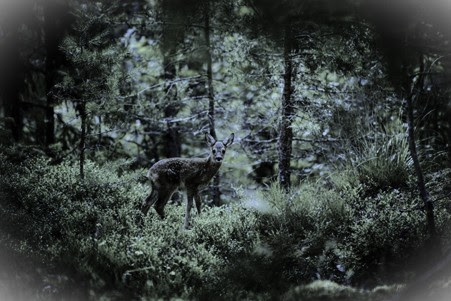
Deer reader, I implore you to listen to my tale.  It is one of horror and grief, of immorality and dark magicks.  It is something that has changed me, and this world, forever, and in ways that may not yet be apparent.  It is a warning.  A curse.  I promise, deer reader, that my tale is the whole and sane truth, as fantastical as it may seem, and I have refrained from any embellishment of the events that I will divulge in the following paragraphs.

I beseech you to take heed.

My tale begins on a cold and wet October evening, and I must admit that it was far later than any respectable gentleman would consider acceptable or appropriate.  Forgive me, I will not explain my lateness; I am aware of the rumours surrounding my private life, and they are neither relevant nor important to my tale, and whatever the tabloids would have you believe about my personal relationship with the disgraced Sir Reginald Winthorpe, I stress it has no bearing on the events of that night.  I will only concede that he was somewhat responsible for my lateness and my dishevelled appearance.

I was in a hurry to get back to my lodgings that night.  The rain was only a cold mist, though I could observe a storm maturing in the distance, black ominous clouds boiling above the forest just outside the city.  I hadn’t had the forethought to carry my umbrella, only my cane, and I didn’t relish the thought of being caught out in the expected deluge.

The streets were quiet, strangely forlorn of their usual clientele.  I didn’t consider this too odd; I surmised that the ruffians, dolly mops and mollys, and those undesirables that often dressed the roadside, had sought shelter from the coming storm.  Hindsight makes me wonder if the true reason was the sinister destiny that was to cast its shadow over that night.

It had sauntered out of the shadows, the beast, and into the dim lamplight, with seemingly no intent to shock me, yet shocked I had been.

I’d struck out at the thing with my cane, hitting down at its skull with deadly force beget by my fright.  Unfounded fright, it seemed.  The innocent fawn died instantly.

I won’t torment you, deer reader, with a morbid description of the pained bleat it emitted with its dying breath, or the terrified glaze in its eyes as the spark of life extinguished.  I won’t tell you how its small body collapsed to the floor like a marionette with its strings slashed.  There was no blood, but the dent in its crown left no doubt as to its fate.

I had killed it.

One does not expect a young deer, nor an adult deer, to be wandering the streets, particularly at night.  I had never expected to cross paths with one in this city; I had only ever encountered them on summer constitutionals in the countryside, and even then, it was a rare occurrence.  I’d seen foxes and rats trawling the streets at night, but never deer.

That is the excuse I tell myself to this day for why I did what I did.  For why I dispatched the poor creature in my momentary fear.

There is no excuse for the deplorable actions I undertook afterward.

At this point I need to pause my tale and provide some context to my life and background, which may go someways to explaining my motivations.  Though, in truth, I cannot tell you why I did it, for even I did not really understand; I may only be lying to myself to ease my troubled conscience.

As a child my mother would read to me every night.  Fairy stories.  Stories of transformation, of other worlds just beyond our own, of immortals and magic.  Spirits hiding in nature, watching us, judging us worthy of heaven.  Or unworthy.  Perhaps that is why I sought out the macabre.  Perhaps not.  I had not been immune to sin even before that night, and I never would be again.

I never stopped believing in those stories.

My favourite of my mother’s fables, that I often fondly recall since her passing, was that of a fairy prince that had been transformed into a fawn, cursed by his father to learn humility.  Though it is only through love that he returns to his true form.  This tale struck close to my heart because my own father had been distant and angry during my childhood and barely acknowledged me even on his deathbed.  He’d always been ashamed of me and what I became.  My father took that shame to his grave.

It was the story of the fawn that came to mind as I stood in the gloomy street on that wet autumn evening and stared down at the corpse of the innocent beast.

I felt overwhelming remorse at my actions.

I have mentioned, deer reader, that I had not been immune to sin, but it may surprise you to hear that I have previously employed use of a hag and her dark magicks.  I fear my life would be far more scandalous than the simple sordid rumours about myself and Sir Reginald, if not for her occult assistance, without which it is likely I would be telling you this story as I turn the crank in jail.

I understand that ‘hag’ often conjures up a crooked crone, but I assure you that she was anything but.  My hag was a beautiful young maiden, though wise beyond her years.  I still remember the knowing look in her eyes, as if she knew what I required of her that night, as I stood on the threshold of her home at the edge of the city, soaked through, for the rain had picked up as the storm approached, holding the beaten creature in my arms and holding back my tears.

I’d watched in awe and anticipation, warming and drying myself near her fireplace, as she cast sorcerous spells and hellish hexes over the corpse, as she poured thaumaturgical tinctures down its throat, rubbed ungodly unguents into its skin.  She’d warned me that there were no guarantees, that not every soul could return from the void, but I’d gripped tight to hope, even as the storm, perhaps an omen of what was to come, reached the city and thundered and roared above our heads.

Her efforts, deer reader, were for naught.

I paid my dues and departed into the tumultuous night, holding the dead fawn, whose life had been cut short by my rash actions, tight against my chest as I faced the wind and the rain.  The heavens poured.  Lightning graced the skies, heralded by thunder.  My grief consumed me as much as the storm enveloped me and my deceased charge.

I wandered for I didn’t know how long, trudged through the squall, freezing and wet, until I found myself at the edge of the forest where I’d first seen the black clouds that now devoured the firmament above.

I knew what I needed to do.  I would bury the poor beast, deep in the forest, return it to whence it came.

I recall being somewhat grateful for the cover of the trees, sheltered from the wind and rain, as I walked my dark fated path.  The storm raged above the canopy, crashing a syncopated rhythm through the flora; it deafened me, forced me to dwell on only my own thoughts, my guilt, my memories of fables about the princely fawn and of the reality of my wanton killing of the deer in the streets of the city.

I’d wanted nothing more than to be washed of my sins, or at least of the sin I’d committed against nature this night, to lay this child to rest and pray for its entry to heaven, but, deer reader, my goodly intentions paved an inevitable path.

I’d tripped, caught my foot against a stray branch or stone, and the dead little deer had been freed from my arms.  I’d found my balance quickly, my hands bracing against a nearby tree, but the fawn had not been so lucky.  I’d inadvertently thrown the creature across the forest floor, its limp body splashing into the muddy ground ahead.

I’d cried out in anguish, my words overwhelmed by the cacophony of the storm.

The unfortunate creature deserved more than being left out in the rain alone, and I fully intended to continue my task.  Something stopped me, deer reader.  Perhaps some sixth sense.  Perhaps my soaked skin restricted my muscles.  Perhaps a ghostly hand gripped my heart and saved me.

The body of the baby deer twitched.  Then its legs kicked out against the muddy forest floor.

I wondered, for a moment, if it had been my imagination, a trick of the gloomy light, hallucinations of my tired brain, but no.  Remember, deer reader, that I told you that I would tell you the whole and sane truth.

It lived.

The fawn, formerly deceased by my own hand, clambered unsteadily to its feet as if it were a newborn.  I watched, stuck to the spot, rain still breaching the leaves overhead, thunder rolling, occasional flashes of lightning illuminating the deer and its caved in skull.

I want to say that I felt some elation in that moment, joy that the animal was alive, glee at my guilt resolved; I tried to force the feeling into my heart, but only an ominous sense of dread gripped my gut.

The fawn was staring at me, one eye distorted by the concave head.  It stood defiantly in the rain, unblinking, unmoving, knowing what I did, accusing me of its murder and the depraved dark acts I’d subjected to its vulnerable body in my attempt at atonement.  This beast was no prince in disguise.

It was a devil.

Thunder rumbled above us.  Me and it, both frozen against the night.  Me, in terror, and it, like a predator deliberating its prey.  I wanted to run, wanted to retreat to the safety of the city, but I could not will myself to move.

Lightning shimmered in the creature’s eyes, and I will swear, deer reader, on my beloved mother’s grave that the glaring pupils lit up with a supernatural crimson glow in that moment.

Then, the fawn bleat a blood-curdling malevolent cry against the storm, against my presence and my actions that dark night, and disappeared into the forest with an uneasy gallop.

I never saw the damnable beast again, despite my every effort, and despite its curse that followed me this past decade.  Those close to me died, sporadically over the years, each death sudden and unexplained.  Even my precious Sir Reginald Winthorpe had succumbed.  You might accuse me of seeing patterns where there are none, of self-fulfilling prophecies, or of madness brought about by my guilt.  But none could explain how each friend, each family member, my lover, had been found collapsed in the forest, their crowns crushed, like the very beast I’d attacked on that cold and wet October evening.

I know, deep in my soul, that it will come for me soon.

And so, deer reader, while I still live to tell you of my terrible tale, I entreat you to take note, to never act rashly against the creatures of this Earth, to never invoke unnatural dark magicks; one may find a prince, or one may find a devil.  And if you ever see a ghastly deer, with its skull battered and bashed, and red glowing eyes, I bid that you run.

The End


********************